


Transparent Pricing for Chiropractic Care in Marietta

Back pain affects approximately 80% of people at some point in their lives. Insurance coverage for chiropractic care depends on your plan’s benefits and the services it covers, so understanding costs upfront matters. A transparent-pricing chiropractor in Marietta should make it clear what an initial visit includes and how ongoing adjustments are priced.
It’s reasonable to want clear answers before booking, especially when pain is disrupting your day. This guide explains what to expect at an initial visit, how chiropractic care may address back and neck pain, headaches, sciatica, stiffness, and mobility concerns, and how insurance benefits may affect your costs.
You’ll also learn how to compare visit fees and decide whether chiropractic care fits your needs. The aim is simple: give you practical information so you can make a comfortable, informed choice without pressure.
Table of Contents
Initial-visit offer and included services
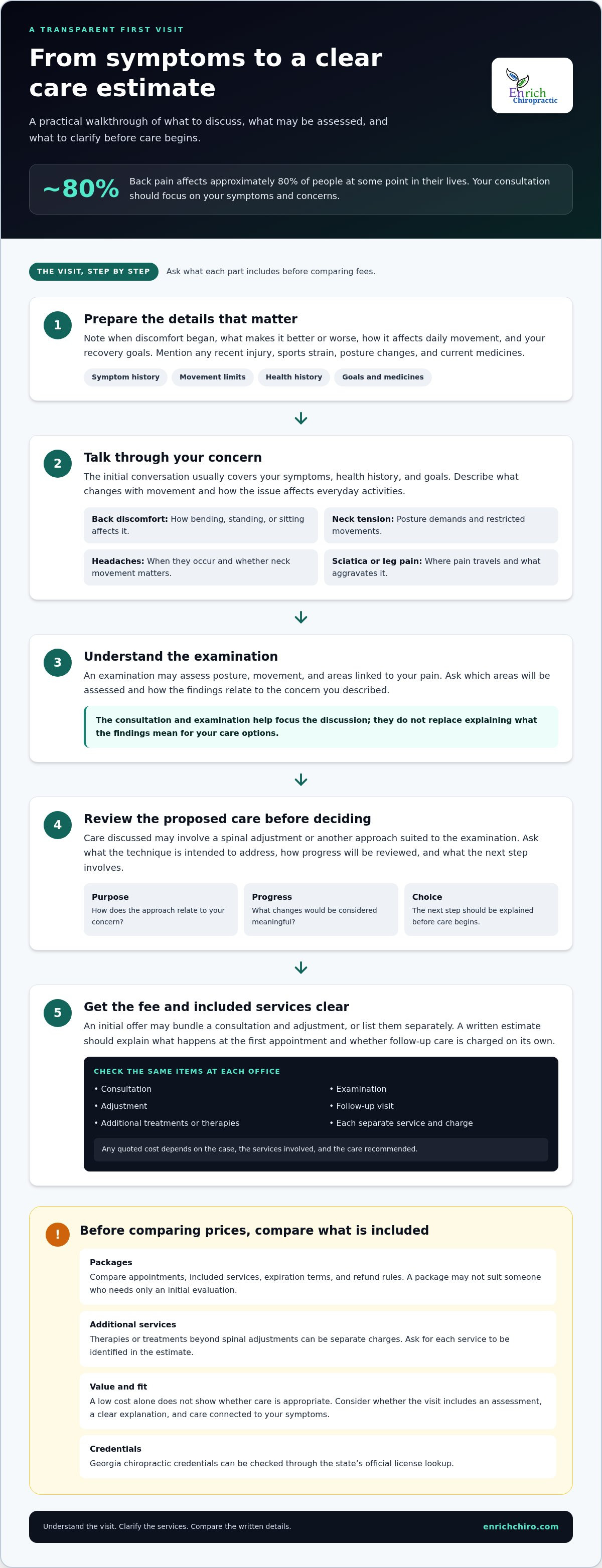
An initial chiropractic visit usually starts with a conversation about your symptoms, health history, and goals. You may be asked when discomfort began, what makes it better or worse, and how it affects daily movement. Note any recent injury, sports strain, or changes in posture, and bring a list of current medicines. These details help focus the discussion on your concerns.
A first visit may include questions, an examination, and a discussion of suitable care. The examination may assess posture, movement, and areas linked to pain. For example, someone with headaches and neck tension can describe when symptoms occur and which movements feel restricted. Someone with sciatica can explain where leg pain travels and what activities aggravate it. The next step should be explained before care begins.
You can verify a chiropractor’s credentials through Georgia’s official license lookup, then compare what each published fee includes. Look for a clear distinction between the consultation, examination, adjustment, and any additional treatment.
Ask what the initial offer includes before comparing totals. A consultation and adjustment may be bundled, while another office may list them separately. The written estimate should clarify what happens at the first appointment and whether follow-up care is charged on its own. Any quoted cost depends on the case and follows a quote request; factors include the services involved and the care recommended.
First-visit questions: Share your main concern, symptom history, movement limits, and recovery goals.
Examination: Discuss which areas will be assessed and how the findings relate to your concern.
Care discussion: Review the proposed adjustment and its purpose before deciding whether to proceed.
Preventive visits differ from appointments for a new pain flare. They can be a chance to discuss recurring strain, posture, or movement concerns and decide whether an adjustment fits your needs. Visits shouldn’t be automatic; make sure you understand the reason for each one and its expected role.
Multi-visit packages can make budgeting harder if the total price hides what each visit includes. Compare the appointments, included services, expiration terms, and refund rules. A package may not suit someone who needs only an initial evaluation. Fees for therapies or treatments beyond spinal adjustments can also be separate, so an estimate should identify each service and charge.
Low cost alone doesn’t show whether care is appropriate. Consider whether the visit includes an assessment, a clear explanation, and care connected to your symptoms. Limited evaluation or unclear add-on charges can make a low advertised rate less useful. Choose based on the stated scope, not price alone.
Conditions treated, including back and neck pain
Back pain is estimated to affect approximately 80% of the population at some point in their lives. It can make ordinary tasks, such as sitting, lifting, or walking, harder. Neck discomfort may also limit turning your head or working comfortably at a desk. Chiropractic care is one treatment option for these concerns, but it isn’t a substitute for every form of medical care.
A consultation connects your reported symptoms with a focused examination. The chiropractor may ask where discomfort starts, how it changes with movement, and whether an injury preceded it. For back pain, describe how bending, standing, or sitting affects your symptoms. For neck tension, mention work posture, sleep position, and movements that feel restricted. These details help guide a discussion of suitable care.
Chiropractic care may also be considered for headaches, sciatica, stiffness, or reduced mobility. Symptoms can overlap, so describe what you feel rather than trying to diagnose the cause yourself. Explain, for example, whether leg pain travels from your lower back or a headache occurs alongside neck tension. Share relevant medical history and any care you’ve already received to keep the consultation focused.
Back pain: Note which daily movements bring discomfort and which feel easier.
Neck pain and tension: Describe stiffness, posture demands, and limits when turning your head.
Headaches: Record where discomfort occurs and whether neck movement affects it.
Sciatica or leg pain: Explain the path of pain and how it affects walking or sitting.
Stiffness: Identify the movements or activities that feel restricted.
The care discussed may involve a spinal adjustment or another approach suited to the examination. Ask what the technique is intended to address and how progress will be reviewed. Healing and recovery vary with the underlying problem, health history, and response to care. A clear explanation helps you understand the purpose of each step, rather than treating adjustments as a routine without a reason.
Insurance coverage can depend on your plan and the treatment involved. Before care begins, understand which services are being discussed and how your benefits apply. If symptoms follow an injury or feel unusual, include that information during the consultation. A medical doctor can help assess concerns that need medical evaluation. For headache-related concerns, you can review chiropractic headache care as one possible topic to discuss during an appointment.
Chiropractic care has been described as a treatment option for common conditions for over a century. That history doesn’t determine whether it suits your concern; the discussion should stay focused on your symptoms and examination. Ask how the proposed approach relates to the problem you described, what changes would be considered meaningful, and when the approach would be reviewed.
Clarify what the consultation has and hasn’t established. If you have questions about the cause of symptoms, the purpose of a technique, or the next step, raise them before deciding how to proceed. Keep the conversation focused on your experience and the care being considered.
Insurance assistance and out-of-pocket costs
Insurance coverage depends on your plan and the service. A policy may treat an initial consultation differently from later adjustments. Your deductible, copay, coinsurance, and remaining benefits can also affect what you pay. Review these details before scheduling and compare them with the services planned for your visit.
Ask your insurer how it handles chiropractic services and claims. Billing codes, claim submission, and explanations of benefits can help clarify how a claim is processed, but they don’t determine what the insurer will pay. The plan’s rules and the service provided influence that decision. Keep the insurer’s response and any estimate together so you can compare them with the final statement.
Before booking, ask which services are included in the fee, whether claims are submitted, and what you may owe if insurance pays less than expected. Find out how adjustments are billed and whether payment is due at the visit. Clear answers make it easier to plan without pressure.
Use this checklist to understand likely out-of-pocket costs:
Coverage: Ask whether the plan covers the specific chiropractic service being considered.
Network status: Find out whether the chiropractor is in network under your plan, since that can change your share.
Patient responsibility: Review any deductible, copay, coinsurance, or visit limit that applies to your benefits.
Claims: Clarify who submits the claim and what paperwork you may receive.
Additional services: Separate spinal adjustments from other treatments, since coverage may differ by service.
An insurer’s estimate isn’t always the final claim decision. For example, the amount estimated from reported benefits may differ after a claim is processed. Compare the explanation of benefits with the office statement. If a line item is unclear, ask what service it represents and how your share was calculated.
Prices for care depend on the case and are provided after a quote request; factors include the services involved and the care recommended. A written estimate can help patients compare the expected charge with their insurance benefits before treatment begins. Keep a copy of the estimate, claim details, and payment records for each visit.
Insurance rules shouldn’t decide whether care is suitable for you. Discuss your condition, the purpose of proposed adjustments, and how progress will be reviewed. If your plan excludes a service, understand the self-pay amount before agreeing to it. That keeps the financial choice clear while leaving you free to decide whether the care fits your needs.
Ongoing chiropractic adjustment pricing
The cost of ongoing chiropractic care depends on what each appointment includes. A standard adjustment may differ from a visit that includes additional assessment or therapy. Your symptoms, the areas addressed, and the services provided shape the quote. For example, care focused on neck pain may involve a different approach from care for lower-back discomfort. Ask for the charge per visit and what that charge covers before agreeing to continued appointments.
Chronic discomfort can change over time, so follow-up visits should have a clear purpose. Your chiropractor can discuss how your condition affects function, such as turning your head, sitting comfortably, or completing daily tasks. Share what has changed since your previous visit. That information helps connect the next adjustment to your current needs, rather than treating every appointment as identical.
A useful review considers both the care and its cost. Ask what the adjustment is intended to address, how progress will be assessed, and what would lead to a change in approach. If a proposed service is separate from an adjustment, ask about its cost and purpose. Keep the answer with your estimate so you can compare it with each statement.
Service included: Confirm whether the charge covers an adjustment alone or other services too.
Reason for follow-up: Ask how the visit relates to your symptoms and daily function.
Progress review: Discuss what changes in discomfort or movement will be assessed.
Billing details: Request an itemized explanation of separate services and patient charges.
Plan changes: Ask how the cost changes if the care approach changes.
Pricing depends on the services involved and the needs of your case; the exact figure is provided in a quote for your case. Compare the listed services and terms, not just the headline charge. This makes it easier to see whether the estimate reflects the care being discussed.
Regular adjustments shouldn’t be an automatic requirement for everyone with discomfort. A clear discussion links each visit to a specific concern, such as limited neck movement after desk work. If the purpose or expected cost changes, ask for an explanation before continuing. You can then decide whether the care still fits your priorities and budget.
Insurance may also affect what you owe for each appointment. Review your plan’s coverage for the specific adjustment and any separate therapy. Keep the estimate, insurance response, and visit statements together. That record helps you spot differences between the expected charge and the final amount, and gives you clear details to discuss with the billing office.
Which Marietta chiropractors publish transparent pricing online?
Start with the clinic’s own website and look for a pricing page, service page, or appointment details. A useful listing distinguishes an initial visit from a standard chiropractic adjustment. It also explains what each listed fee covers. If the site only says “affordable care,” it doesn’t give enough detail to compare the expected cost.
When comparing Marietta practices, compare the same service. Check whether an initial-visit price includes a consultation, examination, and adjustment, or covers only part of the appointment. Then look for a separate price for follow-up adjustments. This prevents comparing a first-visit offer with a single-service charge.
Online prices are clearest when they explain possible extra charges. Look for details on therapies, paperwork, or other services that might be billed separately. An example is a page that lists an adjustment fee but doesn’t clarify whether an assessment is included. That gap can make the headline figure hard to use for budgeting.
Service name: Match the price to the exact visit type, such as an initial consultation or adjustment.
Included care: Check whether the listing describes what the appointment includes.
Additional charges: Look for separate fees for services beyond the adjustment.
Insurance: See whether the page explains billing assistance or how insurance may affect your share.
Payment terms: Review any stated package conditions, payment timing, or expiration terms.
A price page should also explain whether a package changes the per-visit charge or adds conditions. Read the terms alongside the advertised total. Check how many appointments are included, whether they must be used within a stated period, and what happens to unused visits. Those details matter more than a large headline discount.
Search results can show outdated snippets, so open the clinic’s current page before comparing. Note the page date if one appears, then save the relevant details. If a page lists an adjustment but not what it includes, treat it as an incomplete comparison, not a complete estimate. Compare the same type of visit and billing assumptions.
For a transparent-pricing chiropractor in Marietta, useful online information should make the service, included care, and possible add-ons easy to distinguish. The exact price depends on the services involved and your case, and is provided in a case-specific quote. Compare those details with your needs and insurance benefits before deciding.
Review the published adjustment pricing details as one practical next step in comparing what an adjustment includes.
When comparing chiropractors serving Marietta, look for current pricing by visit type, clear details about what each fee includes, and disclosed add-on charges and payment terms. Check how insurance may affect your costs, too.
Enrich Chiropractic: First visit consultation and adjustment
Enrich Chiropractic offers a first-visit consultation and adjustment for people seeking care for discomfort. The visit gives you a chance to discuss your concerns and understand the adjustment before proceeding. It may suit someone experiencing neck pain, tension, or headaches who wants to talk through care options.
For continued care, a standard chiropractic adjustment is available. Each visit can focus on the concern you bring, such as neck tension that affects comfortable movement. You can discuss what the adjustment is intended to address and how it relates to your symptoms.
If you’re ready to explore care for neck discomfort or headaches, visit Enrich Chiropractic online.
Choose a Clear Next Step for Your Care
Before booking, write down the change you most want to make in daily life. It might be sitting more comfortably, turning your neck with less tension, or returning to a familiar routine. Bring that goal into the conversation so the care discussion starts with what matters to you.
A transparent-pricing chiropractor in Marietta should make it easier to understand your choices and decide what feels manageable. You can take time to consider the approach, clarify what each visit involves, and choose whether to move forward. The decision should feel informed, not rushed.
Enrich Chiropractic offers back pain care, a first-visit consultation and adjustment, and standard chiropractic adjustments. If you’re ready to discuss your needs and next steps, contact Enrich Chiropractic. A clear conversation can help you take the next step with confidence.
Frequently Asked Questions
Do you accept insurance?
Insurance billing depends on the practice and your specific plan. Enrich Chiropractic lists its per-visit prices clearly. Ask your insurer whether your policy reimburses chiropractic care and whether reimbursement requires a particular claim form or service details. Keep your receipt and visit documentation so you have the information needed to submit a claim if your plan allows it.
How much does a chiropractor cost in Marietta, GA?
The amount you pay depends on the visit and services involved. For Enrich Chiropractic, use its published pricing information for the first visit and subsequent adjustments rather than relying on general Marietta averages. Before booking, compare what the listed service includes with the care you expect to receive. Your insurance benefits may also affect your final out-of-pocket expense.
Do Marietta chiropractors offer package rates, memberships, or cash discounts?
Offers vary by practice, so don’t assume a package or cash discount is available. Enrich Chiropractic charges by the visit and doesn’t offer membership subscriptions or long-term treatment plans. If you’re comparing other published offers, read the terms for included services, expiration dates, and refund rules. Those details show whether a package suits your expected care or creates an unnecessary commitment.
Does health insurance cover chiropractic care in Marietta, and what are typical copays?
Coverage and copays depend on your individual health plan, so there isn’t one typical amount that applies across Marietta. Review your benefits for chiropractic adjustments, including any deductible, copay, coinsurance, or visit limits. A plan may treat an adjustment differently from another service. Ask your insurer how it processes the specific service, then compare that explanation with your visit statement.



Comments