


Cheap Chiropractor Care in Kennesaw for Pain and Adjustments

Chiropractic adjustments deserve a clear explanation, not guesswork. At Enrich Chiropractic, a cheap chiropractor in Kennesaw means straightforward, one-on-one care with Dr. Rich, with gentle adjustments tailored to your concern. People often seek chiropractic care for back pain, neck tension, headaches, sciatica, stiffness, or mobility issues.
It makes sense to want clear answers before booking, especially when pain affects your day. Know what an adjustment involves, what your first visit includes, and what the care costs.
This guide explains how chiropractic care relates to common pain concerns and what to expect at an initial consultation and adjustment. It also covers how to assess patient reviews and choose care that feels practical, transparent, and suited to your needs.
Table of Contents
Chiropractic care in Kennesaw
In Kennesaw, chiropractic care may include a conversation about your concerns and adjustments for musculoskeletal discomfort. Before choosing care, understand the technique, how your needs will be discussed, and the practitioner’s credentials.
Adjustments and Corrective Care
A chiropractic adjustment uses a controlled movement applied by hand or with a tool. Ask what the technique means for your concern: which area may be addressed, how the adjustment will be performed, and how to communicate discomfort during the visit. Clear answers help you understand the proposed care before agreeing to it.
Evaluation and Care Planning
A useful evaluation starts with your reason for seeking care, such as back discomfort after lifting or stiffness that affects daily movement. Share when symptoms began, what changes them, and any injuries or relevant health history. The practitioner can use those details to discuss whether chiropractic care fits your concern and explain the proposed next step. Ask how progress will be reviewed and what would prompt a change in approach.
Treatment Risks and Warning Signs
Before an adjustment, describe any current discomfort, recent injuries, and health concerns that could affect positioning or movement. Ask what sensations may occur during the technique and tell the practitioner if a movement feels painful or unsuitable. A warning sign in the care process is pressure to continue without addressing your questions. You should understand the approach and feel able to pause before treatment proceeds.
To verify a Kennesaw chiropractor’s Georgia license, consult Georgia’s licensing records and compare the practitioner’s name and license status. Chiropractors complete four years of doctoral-level training after undergraduate studies, pass national board exams, and meet state requirements to practice.
Orthopedic care for pain and injuries focuses on explaining the concern and the care being considered. Athletes, for example, can describe which movement brings on discomfort and how it affects practice. For pregnancy care, ask what the Webster Method involves, how the approach is adapted, and what training the practitioner has for that method. These questions clarify the scope of care without assuming every technique suits every person.
Services for back pain, neck pain, headaches, and sciatica
Start with the problem affecting your daily routine. Describe where discomfort begins, what activities make it worse, and how it changes what you do. For example, note whether back pain interrupts lifting, neck tension makes turning difficult, or leg pain affects walking. These details help focus the discussion without assuming every symptom has the same cause.
Back pain care and neck pain care focus on the areas and movements you identify. Dr. Rich can discuss a gentle chiropractic adjustment in relation to your concern. Explain whether discomfort began after an injury, builds during desk work, or appears during exercise. Athletes can describe the movement that triggers symptoms, such as bending, reaching, or turning. The aim is to connect the adjustment with a specific concern and daily function.
Headaches can have different patterns, so describe their location, timing, and any accompanying neck tension. For example, explain whether discomfort starts after long periods at a screen or occurs alongside restricted neck movement. Headache care should begin with that history, rather than assuming an adjustment is appropriate for every headache. Share any change in the pattern and ask how the proposed approach relates to your symptoms.
Sciatica and leg pain care starts with the pattern of discomfort. Describe where it travels, whether it affects one or both legs, and which positions change it. If sitting, walking, or bending brings on symptoms, include that example. This gives Dr. Rich useful context for discussing an adjustment and helps distinguish the concern from general back stiffness.
For ongoing pain, set a practical goal beyond simply naming a painful area. Choose an activity, such as completing a work shift, sleeping comfortably, or taking your usual walk. Notice how your symptoms affect that activity and share the details when discussing care. For a child, a parent can describe changes in play, school comfort, or movement and ask whether chiropractic care is suitable for the child.
Back or neck discomfort: Note the movement that brings it on.
Headaches: Record where they occur and any related neck tension.
Sciatica or leg pain: Describe where symptoms travel and which positions affect them.
Chronic pain: Set a daily function goal and track changes.
For headaches or sciatica concerns, review the relevant chiropractic care options and consider how they relate to the symptoms you’ve recorded. A focused description helps keep the conversation specific, whether the concern is recurring headaches, leg discomfort, or back pain affecting everyday tasks.
Customer ratings and reviews
Use ratings as a starting point, then read reviews for details about the experience. Before choosing a cheap chiropractor in Kennesaw, compare comments about communication, comfort, and what to expect from care.
Patient Stories and Reviews
A useful review explains the patient’s concern and what happened during the visit. For example, someone with neck discomfort might describe how the practitioner explained an adjustment or responded to questions. Look for details about listening, clear explanations, and respect for patient preferences. Reports of relief are personal experiences, not a promise that you’ll have the same result.
Reviews can also show whether patients felt comfortable discussing their goals. A comment about returning to an active routine describes one person’s experience, while another patient may focus on feeling heard after a car accident. These accounts offer context about communication and the visit, but they can’t establish that an adjustment caused a particular outcome or will work for you.
Review Checks Before Choosing
Read more than the overall star rating. Check whether comments describe a specific visit, such as how an adjustment was explained or how a concern was handled. Look for recurring themes across positive and critical reviews. A detailed account can be useful, while repeated descriptions offer a broader sense of what patients commonly mention.
Before deciding, compare reviews with the care you’re seeking. Someone looking for care after an injury may value clear explanations, while someone with recurring discomfort may prioritize respectful discussion of symptoms. Check that a review refers to chiropractic care and the relevant location. Pay attention to how a practice responds to criticism, especially whether the response stays professional and addresses the concern.
Specificity: Does the reviewer describe an appointment or adjustment, rather than only giving a star rating?
Communication: Do patients mention clear answers and respectful listening?
Comfort: Do stories describe having room to discuss concerns or preferences?
Consistency: Do similar themes appear across several independent reviews?
Relevance: Does the account relate to your concern, such as spinal discomfort or returning to activity?
Use ratings to identify patterns, then weigh those patterns against your needs. Check that comments discuss the kind of visit you’re considering, and distinguish personal reports of relief from general information about care. A review can’t tell you whether a specific adjustment fits your situation. It can help you prepare questions about how the technique will be explained and how your comfort will guide the visit.
A review is most helpful when it gives enough context to see whether the experience relates to your priorities. Consider whether comments address the kind of care you’re seeking, and keep individual accounts in perspective. Use them to prepare questions about communication, comfort, and what to expect, rather than treating a rating as a guarantee of a particular result.
The Kennesaw office advises patients to call to confirm appointment hours because office hours may change. Confirming before you plan a visit can help you make a practical comparison alongside what reviewers say about their experiences.
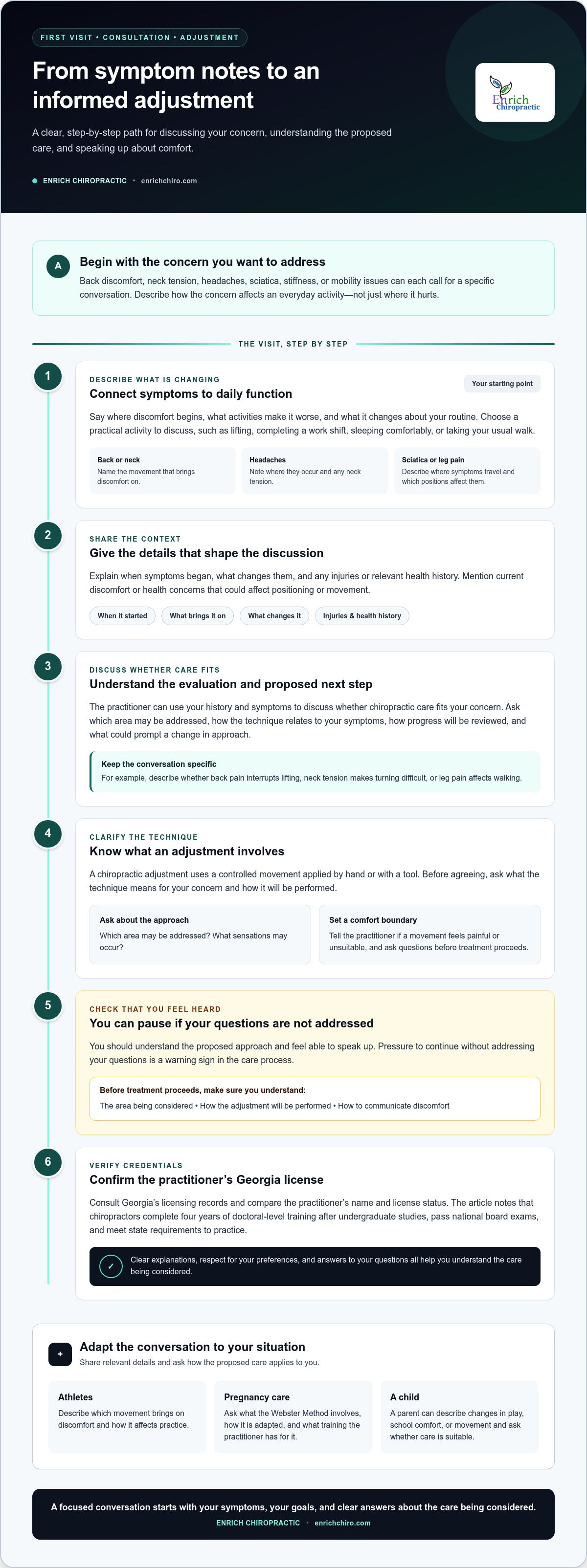
First-visit consultation and examination
A first visit gives you time to explain your symptoms, discuss movement concerns, and understand the proposed care. A short preparation list can help you make the consultation specific and useful.
First-Visit Process
Start by describing your main concern, such as neck pain when turning or sciatica that affects walking. Share when it began, what changes it, and any relevant injury or health history. The practitioner can then discuss your goals and the examination steps related to those details. Ask how each proposed step connects to your concern before deciding how to proceed.
A consultation and adjustment can include discussion followed by a standard chiropractic adjustment when appropriate to the visit. Before treatment, explain which movements feel limited and whether a position causes discomfort. For example, say if lying face down feels difficult or if turning your head increases neck pain. Clear feedback helps keep the conversation focused on your comfort and mobility.
Visit Package Prices
When comparing chiropractic fees, check what each visit includes rather than relying on a package label. Find out whether the amount covers an initial consultation and adjustment or a later adjustment. Comparing the visit type and included care makes it easier to understand the cost before booking.
The price depends on the services included and the needs of your case; the exact figure is provided in a quote for your case. Consider whether the visit involves a consultation, examination, or adjustment when reviewing the quote. Ask for the included services to be described plainly, so you can compare the stated scope with your reason for seeking care.
Before arriving, prepare a concise description of your symptoms. Include the affected area, the movement that brings on discomfort, and one daily task it limits. Someone with stiffness might note difficulty reaching overhead; someone with sciatica might describe how walking feels. These examples give Dr. Rich clearer context than a general statement such as “my back hurts.”
Symptoms: Write down where discomfort occurs and when it started.
Movement: Note an action that feels restricted, such as bending or turning.
History: Bring details of injuries or health concerns relevant to the visit.
Goals: Name one activity you want to manage more comfortably.
Questions also make the first visit easier to understand. Ask what the examination involves, how the proposed adjustment relates to your symptoms, and what you should expect afterward. If you’re concerned about the nervous system or a particular technique, state that directly. A clear explanation can help you decide whether the care plan fits your priorities and your comfort level.
Chiropractic adjustments
A chiropractic adjustment is a hands-on technique or a movement applied with a tool. The key question is how the proposed adjustment relates to your symptoms and movement goals. For example, someone with stiffness when turning their neck can describe that specific limit before discussing care. A clear explanation helps you understand what Dr. Rich plans to do and which area he intends to address.
Before treatment, explain what brings on discomfort and what you want to manage more easily. A person who feels stiff after sitting can mention which movement feels restricted. Someone with back discomfort can describe whether bending or reaching changes it. These examples give the discussion a practical focus. Ask what position you’ll use, how the practitioner will apply the adjustment, and how to communicate if you want to pause.
Chiropractic adjustments differ from other forms of therapy. Physical therapy may use exercise, strength training, or balance work. Massage focuses on hands-on work with soft tissues. Those approaches aren’t the same as an adjustment. If you’re comparing options, identify your specific goal first, such as managing a stiff movement or addressing a particular symptom. Then ask how the proposed technique relates to that goal.
Pay attention to the explanation, not just the technique’s name. “Adjustment” describes a type of care, but your discussion should clarify the area involved and what is planned. If your concern is limited shoulder movement, for instance, ask how the practitioner will consider that movement and why an adjustment may be relevant. Understanding the approach helps you make an informed choice.
Describe the symptom: Name the affected area and the movement that triggers discomfort.
Ask about the method: Find out whether the adjustment uses hands or a tool.
Discuss comfort: Agree on how you’ll signal a pause during the technique.
Connect care to a goal: Explain the daily movement you want to address.
A useful takeaway: judge an adjustment by how clearly it’s explained and how it connects to your concern. A standard chiropractic adjustment may be relevant when you’re seeking this type of care, but the discussion should stay focused on your symptoms, the technique, and your comfort. If stiffness or restricted movement is your concern, schedule a chiropractic adjustment and bring a specific example of the movement you want to discuss.
Enrich Chiropractic: First visit consultation and adjustment
Enrich Chiropractic provides a first-visit consultation and adjustment for people seeking straightforward care. You can explain what’s bothering you and discuss a gentle adjustment with Dr. Rich in relation to your needs.
For neck tension or headaches, share when symptoms occur and which activities they affect. Enrich Chiropractic provides chiropractic adjustments and care for neck pain and tension. A clear description of your concern helps keep the conversation focused and practical.
If you’re considering a first visit, bring your questions and describe the movement or daily task you want to discuss. For details or to get in touch, visit Enrich Chiropractic online.
Take a Practical Next Step Toward Care
Choosing a cheap chiropractor in Kennesaw is about more than finding an affordable rate. It’s also about feeling comfortable discussing your needs and understanding the care being considered. Before your visit, choose one daily activity you’d like to manage more comfortably. Use that goal to guide your conversation and keep the focus on what matters to you.
Enrich Chiropractic offers back pain care, a first-visit consultation and adjustment, and standard chiropractic adjustments. If you’re ready to discuss whether these services fit your needs, contact Enrich Chiropractic. Share the concern you want to address and the movement or task it affects. A clear starting point can make your next step feel more straightforward. Keep your questions close, take the conversation at your own pace, and move forward with confidence.
Frequently Asked Questions
What is the cost of a chiropractic visit in Kennesaw, GA?
There isn’t one visit total that applies to every chiropractic appointment in Kennesaw. The amount depends on whether the visit includes an initial consultation, examination, adjustment, or follow-up care. The exact figure is given in a quote for your case. Compare the services included as well as the total, so visits with different inclusions aren’t mistaken for equivalent options.
Which chiropractors in Kennesaw offer low-cost first visits or new-patient specials?
Enrich Chiropractic offers a first-visit consultation and adjustment, so it’s one local option to consider. A low-cost special should clearly explain what the visit includes and what future appointments involve. Compare those details rather than relying on the word “special” alone. This helps you understand whether the offer matches the care you’re seeking and how later visits are handled.
Which affordable chiropractors in Kennesaw accept my health insurance?
An affordable rate doesn’t establish whether a chiropractor participates in your insurance network. Start with your plan’s provider directory and search for chiropractic care near Kennesaw. Then review your benefits for network rules, referrals, deductibles, copays, and visit limits. These details can affect your out-of-pocket responsibility. A directory listing and your specific plan’s terms are more useful than assuming coverage from a clinic’s pricing.
What are the cash-pay prices for chiropractic adjustments in Kennesaw?
Cash-pay amounts depend on whether you’re paying for an initial consultation and adjustment or a later adjustment, along with what the visit includes. The exact figure is given in a quote for your case. Compare the stated visit type and services, not just the total. That makes it easier to understand what you’re paying for and whether the quoted care matches your needs.
Are there chiropractic clinics near Kennesaw with sliding-scale fees or payment plans?
Sliding-scale fees and payment plans are separate policies, so don’t assume either is included in a cash-pay rate. A useful comparison looks at how an income-based fee is determined, whether installments change the total, and when each payment is due. Also distinguish a payment option from a care recommendation. Clear terms help you assess affordability without confusing billing arrangements with care.
Does health insurance cover chiropractic care in Georgia, and what are typical copays?
Coverage and copays depend on your individual insurance plan, so there isn’t one copay that applies to every Georgia patient. Review the plan’s chiropractic benefits, network rules, deductible, copay or coinsurance, and any visit limits. For example, a plan may show a copay while the deductible still affects other costs. Use your benefits information to estimate your share before scheduling.



Comments